
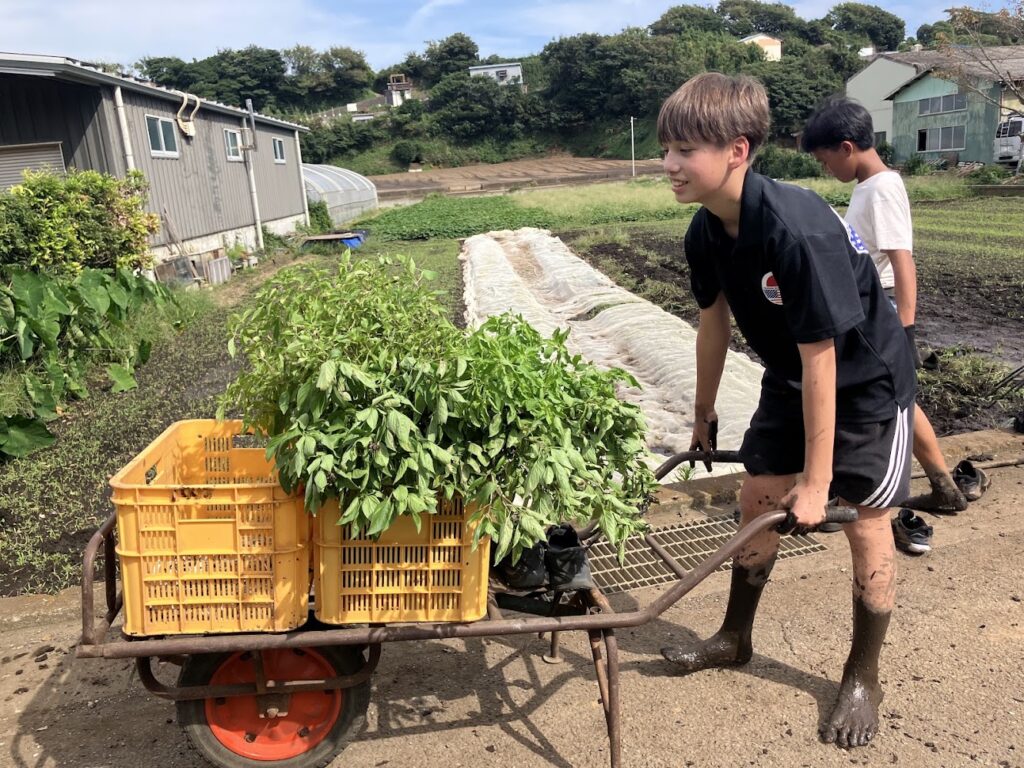
At YBS Middle School, our Farming Project connects students with the local community through hands-on experiences in agriculture.
Last month, our students headed out for their first Farming Project of the new school year.
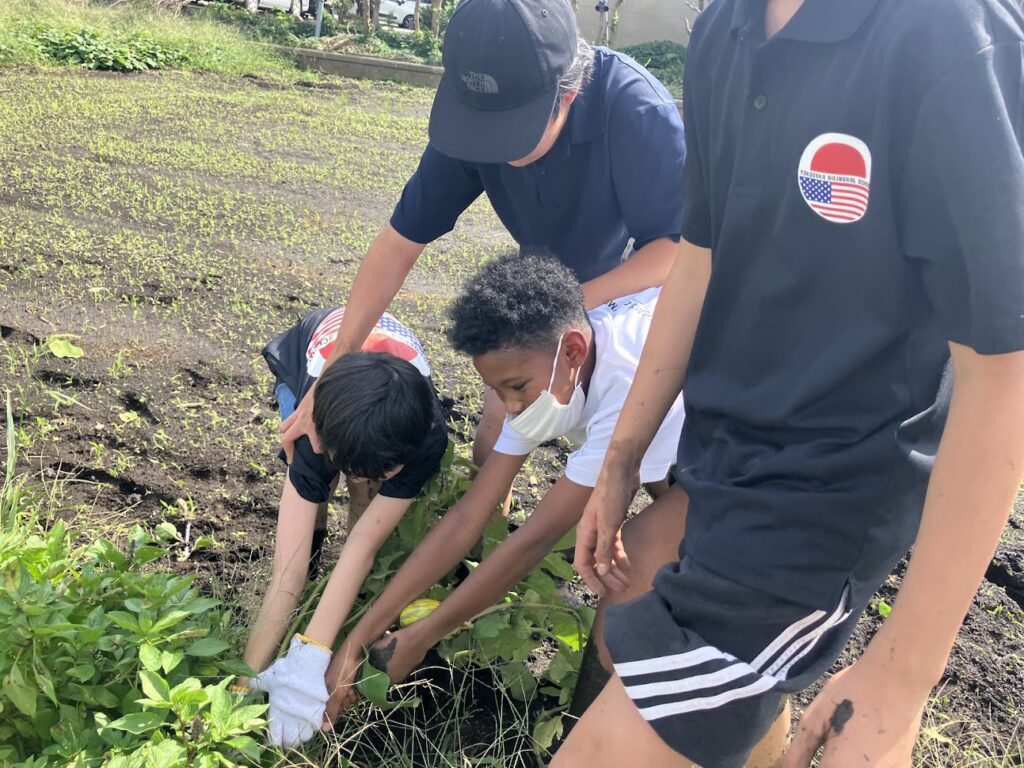
Throughout the year, students take part in a variety of seasonal farming activities, including planting seeds, weeding, harvesting, and preparing the soil.
But this time, the experience turned out to be very different from what we had expected.
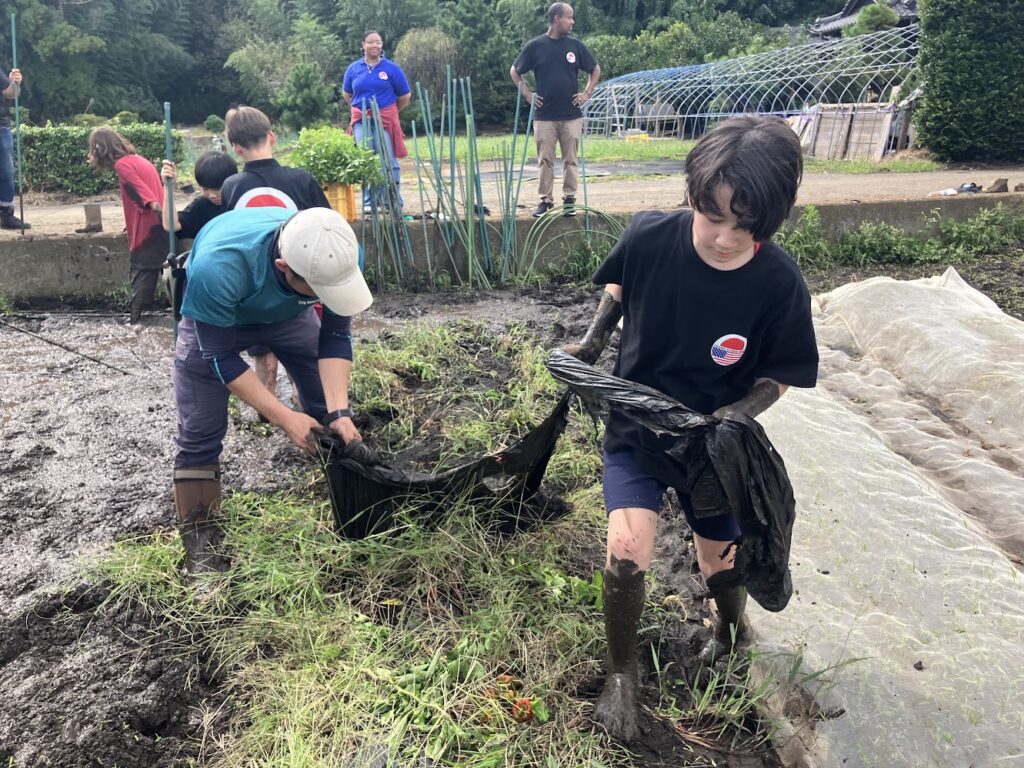
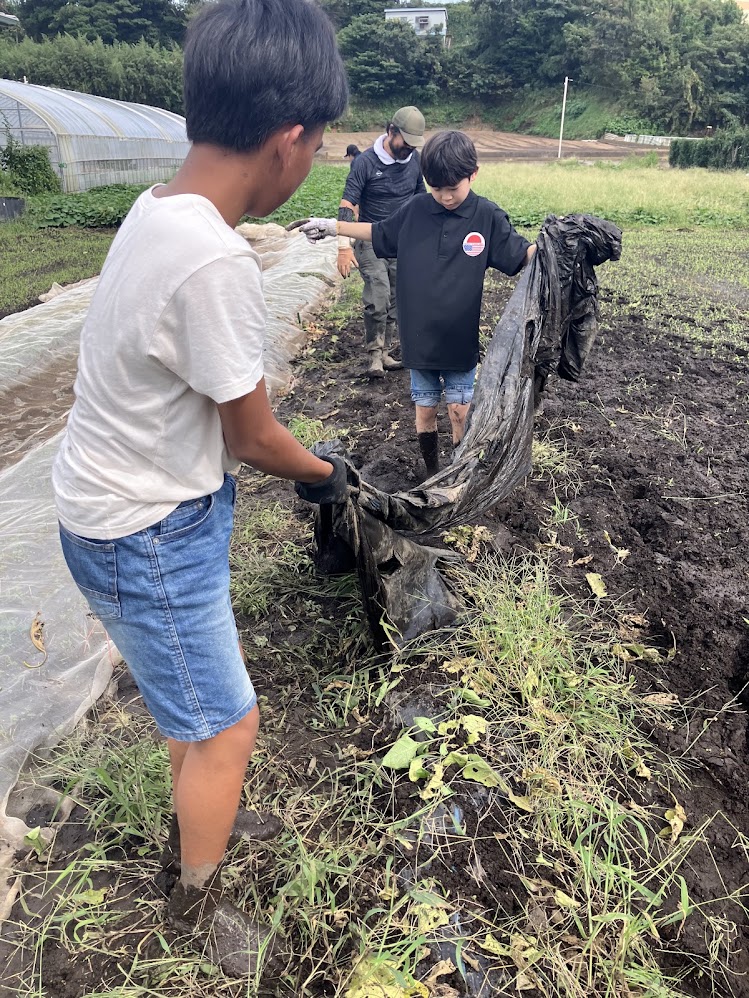
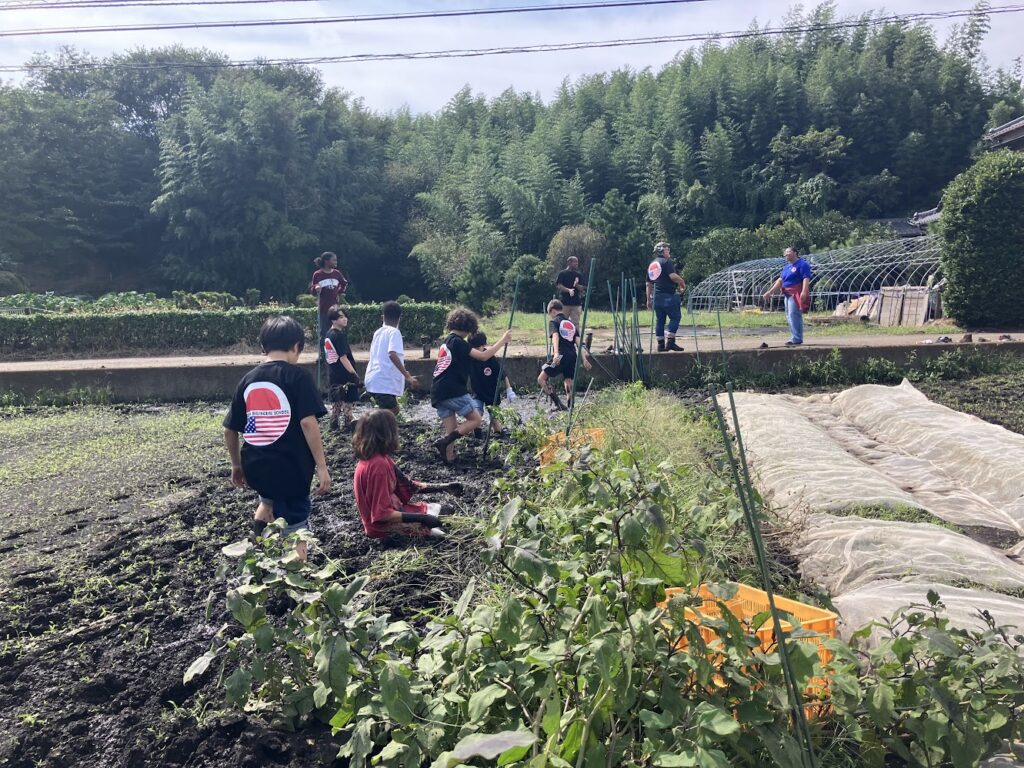
A typhoon had passed through the area just a few days earlier, and rainwater had not yet drained away. The entire field was covered in thick, muddy soil.
Tasks that would normally be simple suddenly became a challenge.
Even with their rain boots on, students struggled to walk as their feet sank into the mud. Eventually, many of them gave up trying to work in their boots and faced the muddy field barefoot.
Even pulling out a single weed required several times the usual effort.
Yet, as they struggled through the mud, the children seemed to rediscover the joy of being little again, laughing and throwing themselves wholeheartedly into the experience.
Watching them laugh as they got covered in mud, I felt that something much more meaningful was happening beyond whether they could complete the farming tasks we had originally planned.
The Reality of Working with Nature
Agriculture is not a job that can be done under the same conditions every day.
Weather, temperature, rainfall, and soil conditions all play a role.
Changes in nature can affect the work that needs to be done each day, the growth of crops, and even people’s livelihoods.
This time, our students did not simply learn about these things in a classroom. They stepped into the muddy field themselves and experienced the reality firsthand.
The heavy rainfall brought by the typhoon had also significantly affected the vegetables that had been growing in the field.
This was the time of year when various vegetables would normally be ready for autumn harvest, while new crops would begin growing in preparation for winter.
However, the damage caused by the heavy rain would not end with that single event.
Vegetables that were supposed to be ready for harvest had been lost.
The growth of crops that were expected to flourish in the coming months had also been affected.
And these losses could have a lasting impact on the farmer’s future production and livelihood.
What happens in a field does not stay in the field.
The food we eat every day, the lives of people in our local community, and our own daily lives are all connected to nature.
On our way to the bus stop after leaving the farm, our farming instructor, Junpei, showed us a nearby site where a landslide had occurred.
After carefully confirming that it was safe to do so, we observed the damage from a location well away from the affected area.
The landslide had caused extensive damage, with a house caught in its path.
Junpei explained what had happened there and shared the story behind the place with our students.
In that moment, their expressions changed.
Just moments earlier, they had been laughing as they wrestled with the mud. Now, they stood quietly, looking at the scene before them.
Nature is fun.
Nature is fascinating.
But nature can also profoundly change our lives.
Our students were able to see and feel this reality with their own eyes.
“What Can We Do?”
This experience also connected directly with the learning taking place in our Middle School Humanities class.
Currently, our students are exploring the question:
“What can we do to address global warming and climate change?”
Together with their teacher, Jay, they are examining this question through classroom debates.
Global warming and climate change.
Natural disasters.
And what each of us can do in response.
Through this Farming Project, the questions they had been discussing in the classroom began to take on a different meaning.
They had stood in a field after heavy rainfall and worked in the mud themselves.
They had also seen a place that had suffered significant damage from a natural disaster.
Words such as climate change and natural disasters were no longer just concepts found in textbooks. They became something connected to their own lives and the community around them.
And this led to another important question:
What can I do?
What can we do?
Learning kanji, grammar, and mathematical equations is, of course, important.
But when knowledge connects with the real world we live in, learning takes on a deeper meaning.
This Farming Project gave us another opportunity to reflect on just how powerful that connection can be.
Learning from the Real World
At YBS Middle School, we believe that learning should extend beyond the classroom.
Stepping into the community.
Meeting people.
Connecting with nature.
Facing unexpected situations.
And discovering new questions along the way.
Precisely because this day turned out differently from what we had planned, our students were able to experience more deeply what it means to live in harmony with nature.
Sometimes, the most meaningful learning happens when things don’t go as planned.
Through the Farming Project, YBS Middle School will continue to connect with our local community, creating opportunities for students to deepen their experiences, expand their learning, and develop their own thinking and ideas.